Birmingham, Alabama · Homes & commercial properties
Asbestos concerns? Start with a clear plan.
Testing, inspection, and removal planned around your property and the work ahead. Get a Free Estimate
Birmingham, Alabama · Homes & commercial properties
Testing, inspection, and removal planned around your property and the work ahead. Get a Free Estimate
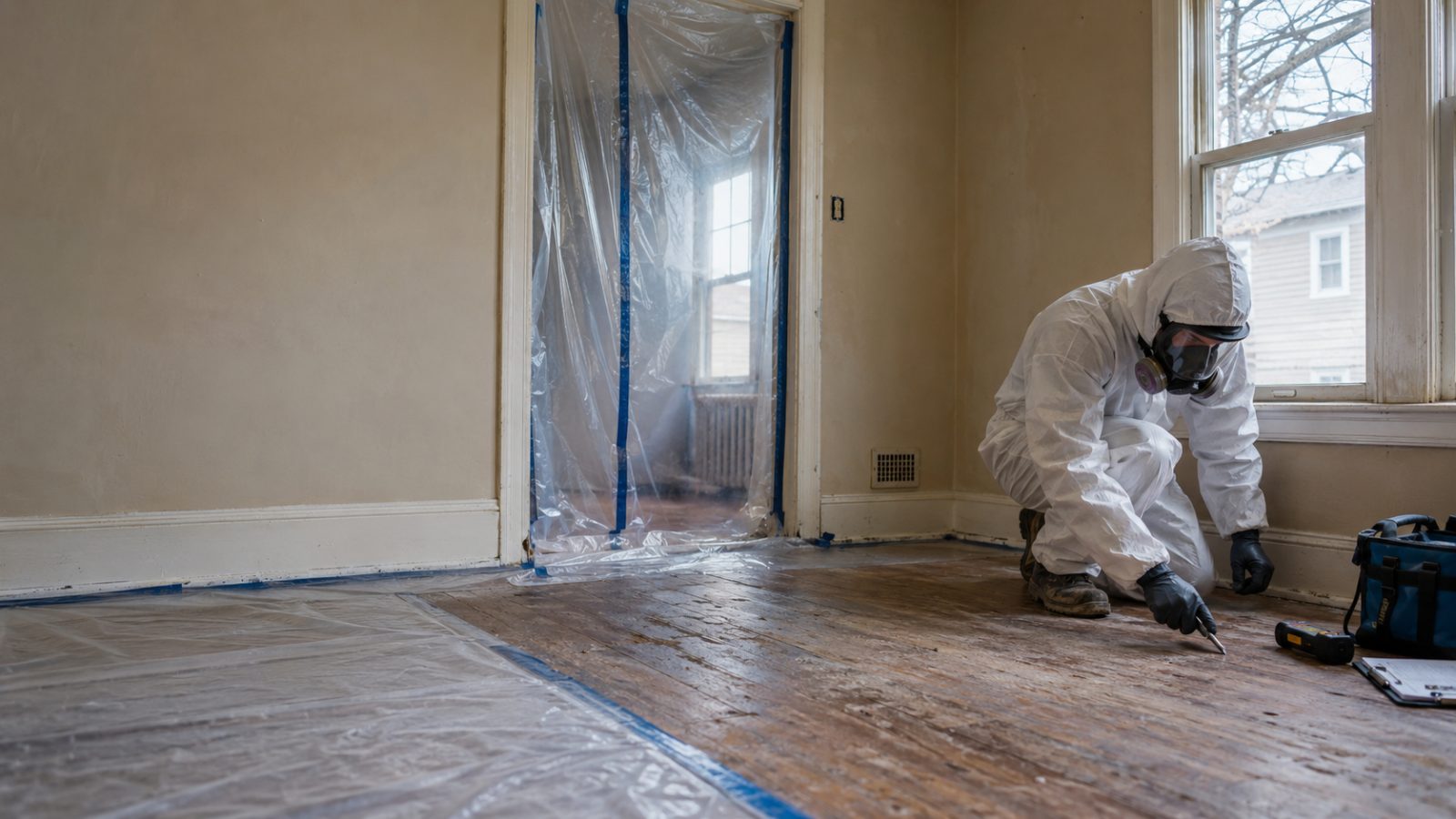
Old floor tile beneath a newer floor. Insulation exposed during a repair. A textured ceiling you want to replace. Tell us where the material is and what you plan to do next.
If the material has not been identified, we can discuss testing and inspection. If you already have results, we can use them to discuss the removal scope.
Birmingham AL Asbestos Removal handles asbestos testing and inspection, residential asbestos removal, and commercial asbestos removal in Birmingham and nearby Alabama communities, along with removal of specific materials: older floor tile and adhesive, insulation around pipes and equipment, and textured popcorn ceilings. Each of those services has its own section below, covering the questions we ask, the factors that shape the scope, and what tends to change from one property to the next.
An asbestos enquiry usually starts with another goal: replacing a floor, repairing a ceiling, updating equipment, or renovating a building. We begin with that goal and with the information available about the material. Identification and removal are separate steps, and the scope is agreed before any removal is scheduled. If something is still uncertain, we say so rather than guessing.
An asbestos project is easier to manage when you know who is handling each stage. Our work is organized around project planning, field coordination, and customer enquiries, and you can ask who will coordinate your project and who will carry out the work before agreeing to anything. Our work covers homes, managed properties, and commercial buildings around Birmingham.
Start with the material and your plans for the property. We discuss the areas involved, access, and scheduling before agreeing on the work.
We would rather explain what is included, and what belongs to a separate scope such as painting, new flooring, or plumbing repairs, than leave you to discover it partway through a project. Occupied homes are approached differently from vacant construction sites, and commercial work is planned around tenants, employees, and other contractors. You receive practical explanations without unnecessary jargon.
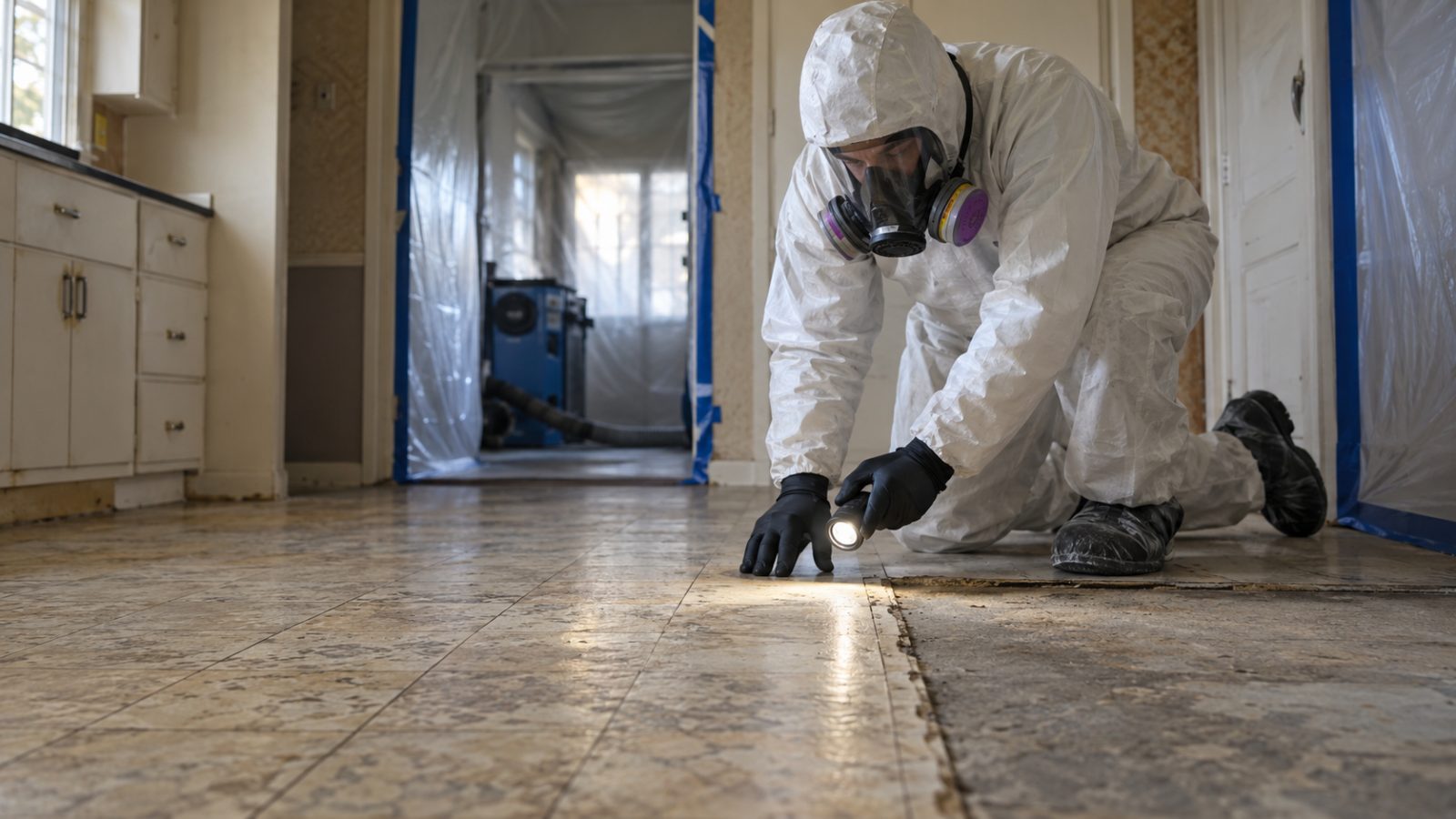
A new floor, a repaired ceiling, or a larger remodel can bring older materials into view in a Birmingham-area home. Old tile under a newer floor, insulation exposed during a repair, or a textured ceiling you want to replace are common starting points. The first question is what the material contains; the next is how it fits into the work you want to complete. Residential asbestos removal is planned around identified asbestos-containing materials and the repair or renovation that has to follow.
Residential projects tend to fall into a few groups. Pre-renovation removal comes before kitchens, bathrooms, basements, flooring, ceilings, or other parts of a home are renovated. Damaged material calls for evaluation and removal planning when a suspect material has deteriorated, broken apart, or been exposed during other work. Older flooring projects can involve floor tile, sheet flooring components, or the adhesive beneath them, any of which may need testing and controlled removal. Ceiling and insulation work comes into play when testing or inspection identifies an asbestos concern in a textured ceiling or an insulation material.
Share any test results, the rooms involved, and whether the home is occupied. We approach occupied homes differently from vacant construction sites, and depending on where the work is taking place, access to part of the property may need to be restricted while work is underway. We discuss the removal scope, access, and scheduling, and we keep the larger renovation plan in view so the removal fits the work that comes next instead of getting in its way.
If the material has not been identified, testing and inspection can be discussed before a removal scope is agreed. If you already have results, we use them to define which rooms and materials are included. The estimate depends on the material, quantity, access, condition, and preparation involved. Whether testing and the work following removal are included, or need a separate scope, is part of the same conversation. A small targeted removal, a room-scale project, and a multi-area residential project are each quoted for the specific property.
Commercial projects need agreement on more than the material being removed. Tenants, employees, site access, other contractors, and renovation phases all shape the plan. Building owners, property managers, and contractors around Birmingham contact us when older materials stand between them and the next construction phase, a tenant improvement, or routine maintenance work that cannot continue until the material is addressed.
The scope may involve one work area or several project phases. Renovation preparation covers identified asbestos-containing materials that would otherwise interfere with planned renovation or construction. Tenant improvement projects involve targeted asbestos work coordinated around interior improvements, lease transitions, or reconfiguration of commercial spaces. Property maintenance projects come up when maintenance teams encounter older materials that need to be addressed before repair work can continue. Larger building projects can involve multiple rooms, floors, building areas, or types of asbestos-containing material, and need scope development before anything is scheduled.
Tell us which areas are involved, what identification information is available, and when the next construction phase is planned. We discuss the asbestos-related scope alongside those constraints, including building access, other contractors, tenant considerations, and timing. Commercial projects benefit from straightforward communication among owners, managers, and contractors, so clear points of contact are part of the plan from the first conversation, and we keep the larger construction or property-management schedule in mind.
Material quantities, access, occupied areas, containment needs, and project phases affect the quote. A targeted commercial removal, tenant improvement asbestos work, and a large commercial removal project are all quoted for the specific property. Clarify the work boundaries and scheduling assumptions when reviewing the scope, so everyone on the project knows where the asbestos work ends and the next trade begins. Bring the site location, available reports, and renovation schedule to the first conversation.
You generally cannot confirm asbestos content just by looking at a material. Many asbestos-containing building products look similar to materials that do not contain asbestos, and older flooring, insulation, ceiling textures, mastics, and other building products may or may not contain it. The presence of an older material does not automatically mean it contains asbestos. When a material will be disturbed during renovation, repair, or demolition and its content is unknown, testing and inspection is usually the place to start.
You may have an older material and no test results, or a report that needs to be considered alongside your renovation plans. Tell us what information you already have. Common reasons to discuss an evaluation include suspect materials that may be disturbed when flooring, walls, ceilings, or other building components are changed; an unexpected layer, insulation product, tile, adhesive, or textured surface uncovered during work; inspection support for property managers and project teams evaluating older building materials before construction; and information that helps determine what material needs to be addressed and how extensive a removal project may be.
We discuss the materials and areas to evaluate, the inspection or testing scope, and how the findings can inform your project. One material in one room is a different scope from several materials across multiple building areas. The identified areas are assessed and appropriate testing steps are determined, and the findings can then be used to plan removal or make other project decisions. Not every asbestos-containing material automatically requires removal; condition, location, the likelihood of disturbance, and your plans all matter. Identification and removal are separate steps.
If renovation work has already uncovered a suspect material, avoid continuing to disturb it until you have a clearer understanding of what it is. Note where it is located and what work has already taken place. The number of materials, areas, access conditions, and purpose of the evaluation affect the quote. Confirm which inspection, sampling, analysis, and reporting items are included in the proposed scope so you know what you will receive.
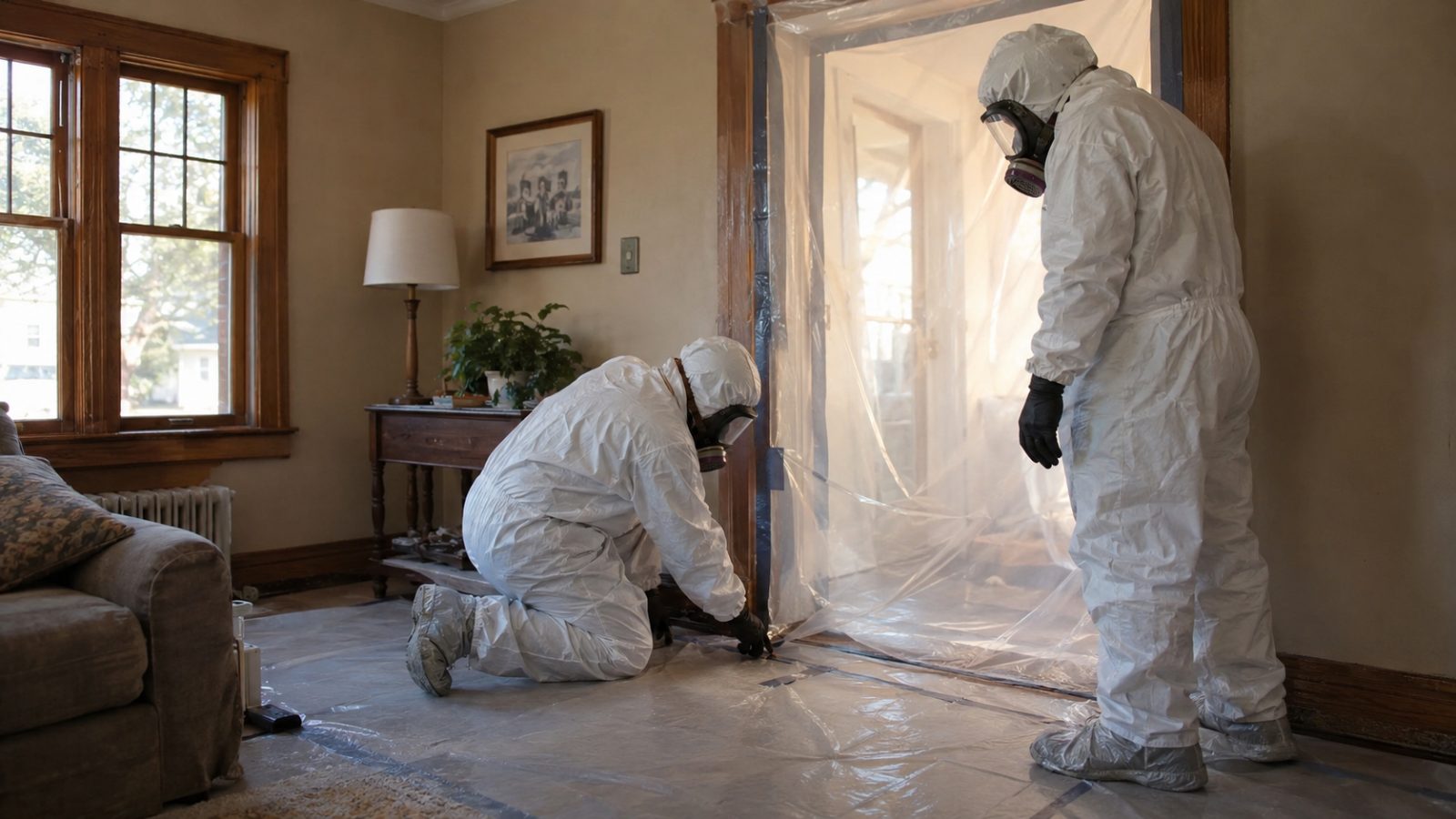
Planning a new floor in an older home or building often raises a question about what is underneath. A flooring enquiry may involve the tile itself, the adhesive or mastic beneath it, or older layers covered by newer carpet, laminate, or other finishes. Tile, adhesive, and covered layers may be different parts of the project, so it helps to identify them separately when discussing the work.
Older resilient floor tile identified as containing asbestos may need to be removed before a new flooring system is installed. Where older adhesive or mastic beneath the tile is part of the asbestos concern, that layer belongs in the scope too. When newer flooring has been installed over an older suspect layer, evaluation comes first. Offices, retail spaces, multifamily properties, and other commercial interiors raise the same questions over a larger footprint, often with phasing around occupied areas.
Disturbing a material that contains asbestos can create additional concerns, particularly when it is broken, cut, ground, sanded, or otherwise damaged. Before removing older flooring, it is worth confirming what material is present and understanding the requirements that apply to the project. We start with what is known about the tile, adhesive, age, and any available testing information, then define the rooms or commercial spaces involved. If the material has not been identified, testing can be discussed before the removal scope is agreed.
Floor area alone does not define the quote. Tile and adhesive, covered layers, material condition, access, and room preparation also matter, and the removal plan considers surrounding finishes and the next phase of construction. A small flooring area, a room or multi-room removal, and a commercial flooring project each get a property-specific quote. Share the rooms, approximate area, and any test results, and confirm which layers and areas are included so you know the project boundaries before work begins.
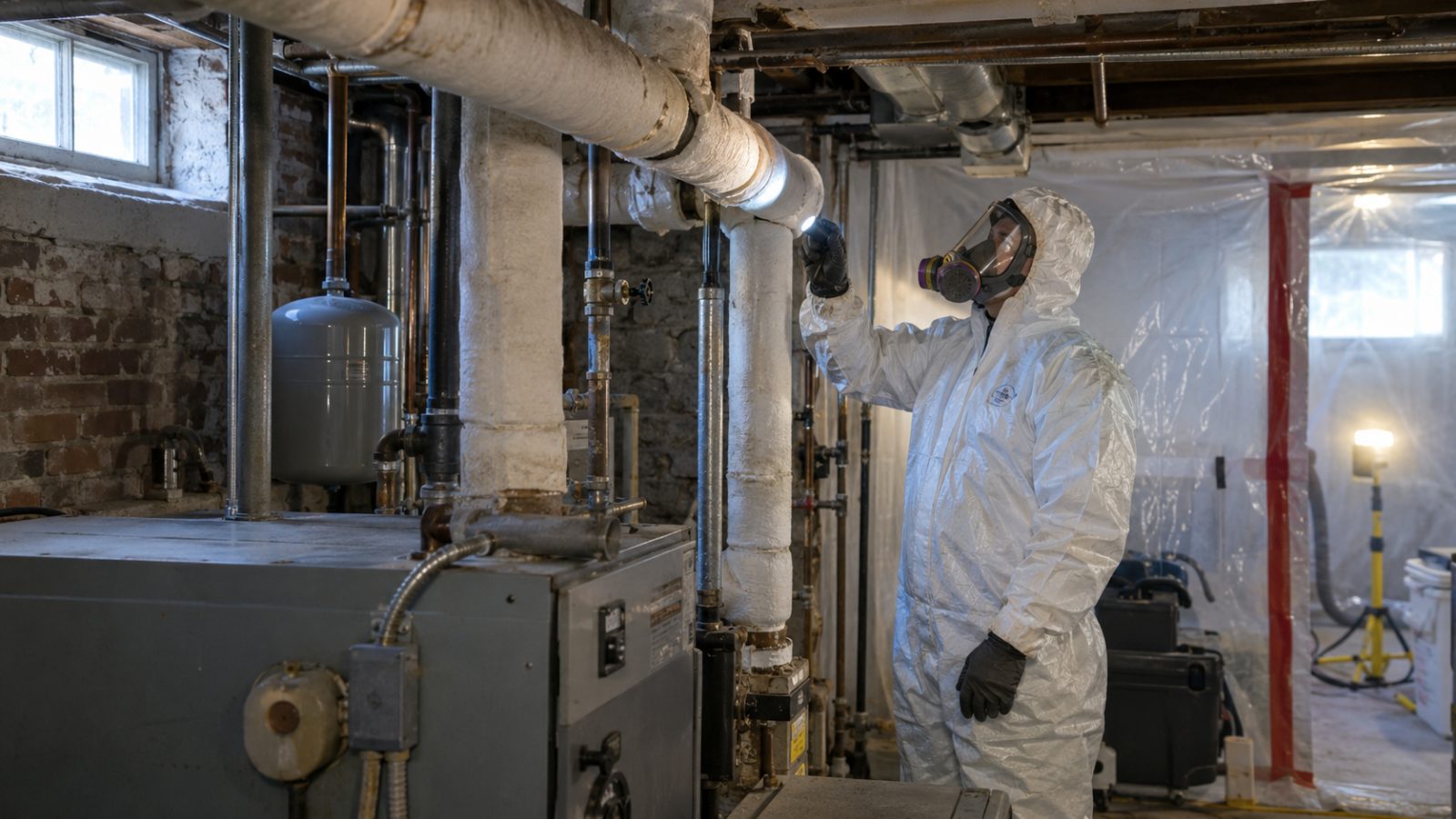
Insulation work may involve one pipe or component, several mechanical areas, or a larger building project. Older insulation around piping, equipment, and building systems often comes into view when a repair, replacement, or renovation is planned. Rather than assuming all insulation involves the same scope, describe the component, its location, and the work that needs to happen around it.
Pipe-related insulation projects involve older insulated piping where identified materials need to be addressed before repairs or replacement. Mechanical-area projects involve older insulation around equipment or building systems. Renovation preparation covers removal before remodeling, demolition, or upgrades that would otherwise disturb identified asbestos-containing insulation. Commercial building systems bring larger scopes coordinated around facility maintenance, construction schedules, and building access.
We discuss available identification information, the amount involved, access, and coordination with repair or equipment contractors before defining the removal scope. Insulation projects can be complex, so we start by identifying exactly where the affected material is located and what building systems or areas are involved. Any planned plumbing, mechanical, renovation, or demolition activities are factored into scheduling so the trades that follow know when their part of the work can begin.
The type, amount, condition, and location of the material affect the quote, along with access and surrounding systems. A limited insulation removal, a project covering multiple building components, and a commercial insulation project are quoted individually. Discuss the boundaries between removal and any plumbing or mechanical work, so it is clear which tasks belong to the asbestos scope and which belong to the contractor handling the system itself.
If you want to replace an older textured ceiling, start with the information available about the material. Older texture should be identified rather than judged by appearance alone, and if asbestos content is unknown, testing may be appropriate before the texture is scraped or disturbed. Share any test results and describe the rooms involved.
A single room and a whole-property update need different planning. Single-room projects involve targeted removal planning for one room where an older textured ceiling has been identified as containing asbestos. Whole-home ceiling updates involve multiple rooms as part of a broader interior renovation. Damaged textured ceilings need evaluation when a ceiling has been affected by leaks, repairs, remodeling, or accidental disturbance. Older textured ceiling materials in offices, multifamily properties, and other commercial buildings follow the same approach at a larger scale.
We discuss ceiling area, height, access, room contents, and the work planned after removal. Furnishings, surrounding surfaces, and future renovation work are considered when the removal is planned. We define which ceilings and spaces are included so the project scope is clear, and we keep painting, ceiling refinishing, remodeling, or other follow-on work in mind when scheduling.
Ceiling area, height, condition, access, and room preparation affect the quote. A single-room project, a multi-room removal, and a large or commercial ceiling project are each quoted for the property. Confirm which rooms are included and whether repairs or refinishing are separate. Identification, removal, and refinishing are distinct pieces of work, and keeping them separate makes the estimate easier to understand and compare.
We do not publish set prices for asbestos testing or removal. There is no single useful price for every asbestos project. Cost can change based on the type of material, the amount involved, its condition, accessibility, containment needs, building occupancy, and overall project complexity. A small targeted removal and a large commercial project can be very different, so pricing depends on what an inspection and review of the property find.
The table below lists the kinds of work described on our service pages and the factors that shape each one. Every row is a category of work, not a quote. The estimate itself is free, and the figure comes from the material, the areas involved, and the work that follows, not from a number listed in advance.
| Kind of work | What shapes the price | Cost |
|---|---|---|
| Targeted material evaluation | Materials involved, access, purpose of the evaluation | Property-specific quote. Free estimate. |
| Multiple-area or commercial inspection | Number of materials and areas, building size, sampling and reporting scope | Property-specific quote. Free estimate. |
| Small targeted residential removal | Material and access | Property-specific quote. Free estimate. |
| Room-scale residential removal | Quantity and containment | Property-specific quote. Free estimate. |
| Multi-area residential project | Total project scope, occupancy | Property-specific quote. Free estimate. |
| Targeted commercial removal | Affected material, work area | Property-specific quote. Free estimate. |
| Tenant improvement asbestos work | Area and scheduling | Property-specific quote. Free estimate. |
| Large commercial removal project | Total scope, occupied areas, project phases | Property-specific quote. Free estimate. |
| Floor tile and adhesive removal | Tile and adhesive, covered layers, square footage, access | Property-specific quote. Free estimate. |
| Insulation removal | Material type, quantity, location, surrounding systems | Property-specific quote. Free estimate. |
| Popcorn ceiling removal | Ceiling area, height, condition, room preparation | Property-specific quote. Free estimate. |
These rows describe kinds of jobs, not quoted prices. When reviewing an estimate, ask whether testing, preparation, and the work after removal, such as new flooring, ceiling refinishing, or plumbing and mechanical repairs, are included or belong to a separate scope. Request an estimate and describe the material, the property location, and the work you are planning.
Every service on this site follows the same basic sequence. It is a series of conversations and checks rather than a single step, and what changes from job to job is the material, the areas involved, and the work planned afterward. Here is how that sequence works.
Share the location of the property, the material you are concerned about, where it is, and the repair or renovation work you are planning. Old floor tile, exposed insulation, a textured ceiling, or an unexpected layer uncovered during work are all reasonable starting points.
If work has already uncovered a suspect material, avoid continuing to disturb it. Note where it is and what has already been done. Include the property city or ZIP code so we can discuss the location.
Existing test results, reports, and any information about the age of the material help define the next step. If you already have results, we use them to discuss the removal scope.
If the material has not been identified, testing and inspection can be considered before any removal is planned. Identification and removal are separate steps, and testing does not commit you to removal.
Where testing or inspection is part of the scope, we determine whether one material or several building areas need attention. The identified areas are assessed and appropriate testing steps are determined.
The findings are then used to decide what needs to be addressed. Not every asbestos-containing material automatically requires removal; condition, location, likelihood of disturbance, and your plans all matter.
The removal scope is developed around the material, quantity, location, access, condition, containment needs, and the surrounding areas. For floors, that includes tile, adhesive, and covered layers. For insulation, it includes the systems involved. For ceilings, it includes area, height, and room contents.
The estimate explains what is included and what belongs to a separate scope, such as painting, refinishing, new flooring, or plumbing and mechanical work. Approval comes before work is scheduled.
We discuss occupancy, building access, and timing. Occupied homes need different planning from vacant construction sites, and access to part or all of the property may need to be restricted while work is underway.
Commercial projects are coordinated around tenants, employees, other contractors, and renovation phases, with clear points of contact among owners, managers, and contractors.
Removal proceeds according to the agreed project boundaries, with communication about access and next steps. If something outside the agreed scope comes up, it is discussed rather than added silently.
Once the scoped work is complete, the flooring, ceiling, mechanical, or renovation work you planned can move forward.
Serving Birmingham, Vestavia Hills, Hoover, Homewood, Mountain Brook, Trussville, and Bessemer. Our work covers homes, managed properties, and commercial buildings across these communities, from older residences being renovated to commercial spaces being reconfigured for a new tenant.
Include the property city or ZIP code in your enquiry so we can discuss the location and project. We travel to properties in the Birmingham area and do not have a staffed office open to the public, so the first conversation usually happens by phone or through the estimate form.
Discuss the materials and work areas covered by the proposed scope, and which parts of the wider project are separate.
Review access, occupied rooms, and the repair or renovation work that follows.
Review existing test information or discuss identification before planning removal.
Ask who is coordinating your enquiry and who will carry out the work.
Discuss the material, quantity, access, and other factors behind the price.
Residential, managed, and commercial properties are each planned around the people using the building.
You generally cannot confirm asbestos content just by looking at a material. Older flooring, insulation, ceiling textures, mastics, and other building products may contain asbestos, so testing is often the appropriate way to identify a suspect material before disturbing it.
Potential concerns can include certain older floor tiles and adhesives, insulation materials, textured ceilings, and other building products. The presence of an older material does not automatically mean it contains asbestos, which is why identification or testing can be important.
Testing may be appropriate when a planned renovation will disturb suspect material whose asbestos content is unknown. Knowing what is present before demolition, scraping, sanding, cutting, or removal can make it easier to plan the project correctly.
Not every asbestos-containing material automatically requires removal. The material's condition, location, likelihood of being disturbed, and your renovation or demolition plans all matter. An inspection can help clarify what approach makes sense for the property.
That depends on where the work is taking place and the scope of the project. For some projects, access to part or all of the property may need to be restricted while work is underway. We discuss occupancy and access considerations before the project begins.
Cost depends heavily on the material, quantity, accessibility, condition, containment needs, and overall scope. A small targeted removal and a large commercial project can be very different, so a property-specific estimate is the most useful way to discuss pricing.
The schedule depends on the material and size of the project. A limited residential scope can be very different from a multi-room or commercial project. Access, preparation, project boundaries, and coordination with other construction work can also affect timing.
Disturbing a material that contains asbestos can create additional concerns, particularly when it is broken, cut, ground, sanded, or otherwise damaged. Before removing older flooring, it is worth confirming what material is present and understanding the requirements that apply to the project.
Avoid continuing to disturb the material until you have a clearer understanding of what it is. Note where it is located and what work has already taken place, then contact an asbestos professional to discuss identification, testing, and the next step.
Tell us what you found, where the property is, and what you want to do next.
Free — no obligations